• A kind of format design, produce in the early twentieth century
European countries, perfect the fifties, in Switzerland.
• Grid design style formation is dependent on the construction of its
profound influence, his style is characterized by using digital proportional
relationship, through strict calculation, the type area is divided into numerous
uniform size of the grid.
• Will into a column, the second column, 3 columns and more bar put
words and pictures in it, make the space has a certain rhythm change, produce
beautiful rhythm relations, the grid design in practice with scientific, seriousness,
but also bring the negative effect of mechanical layout.
• In the page design, grid provides all the design elements of a
structure, it makes the design to create a more relaxed, flexible, also let the
designer's decision-making process easier. When arranging elements on the page,
the use of the grid can improve the accuracy and consistency, to create
provides a framework for a higher degree of. Grid enables designers to make
reliable decisions, and effectively use their time. They can design and arrangement
of the injection energy - the look is quite small and unrelated elements, such
as page Numbers - could have dramatic impact on page, make people through the
prints feel the pulse of design.
The grid is the foundation of the design was established. In
essence, it is a piece of design work of the bone. Using grid is to organize
the content of the page can improve the accuracy and consistency, it provides a
framework for a higher degree of; Grid to a great extent, convenient and
simplify our typesetting work. Unlike print media, web grid design should
consider different browsers, different operating system platforms, different
variable factors such as the screen size, web page design of grid system need
to be able to adapt to these changes. Grid can greatly increase the network's
visual environment.
"The grid system is an aid, not a guarantee. It permits a number of possible uses and each designer can look for a solution appropriate to his personal style. But one must learn how to use the grid; it is an art that requires practice."
- Josef Müller-Brockmann

Josef Müller-Brockmann
| |
Born
|
9 May 1914Rapperswil, Switzerland
|
Died
|
30 August 1996 (aged 82)
|
University and Kunstgewerbeschule, Zurich
| |
Occupation
|
·Teacher
|
|
|
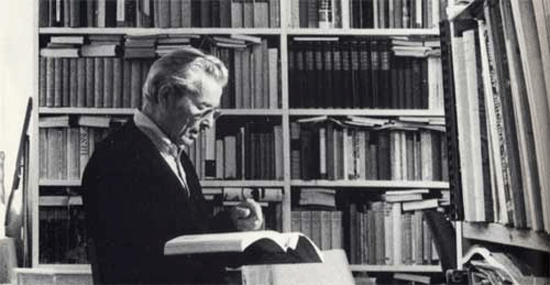
Josef Müller-Brockmann, (May 9, 1914, in Rapperswil – August 30, 1996),
was a Swiss graphic designer and teacher. He studied architecture, design and history of art at both the University and Kunstgewerbeschule in Zurich. In 1936 he opened his Zurich Zurich
He is recognised for his simple designs and his clean
use of typography, notably Akzidenz-Grotesk, shapes and colours which
inspires many graphic designers in the 21st century.


没有评论:
发表评论